Initiatives to Reduce Environmental Impact
CO2 Reduction and Energy-Saving Initiatives
Our Group promotes energy-saving initiatives to reduce GHG emissions. We are working to improve the efficiency of energy use and reduce CO2emissions through more efficient and optimized operation of production equipment and utility facilities.
We will continue our energy-saving initiatives to further reduce GHG emissions.
Air leak improvement case study (Head office Plant)
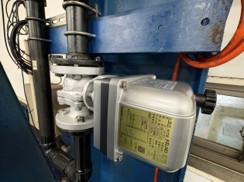
We are continuing our efforts to improve air leaks and strengthening the energy management of our compressed air equipment. To reduce energy loss due to the aging of compressed air piping and connected equipment we have introduced electrically operated pipe switching valves to suppress the supply of unnecessary compressed air when the equipment is not in operation. We are working to conserve energy and reduce CO2 emissions through both continuous improvement activities and the implementation of energy-efficient equipment and systems. The results of this initiative are being shared at information-sharing meetings with Group companies, and the introduction of similar initiatives is being considered.
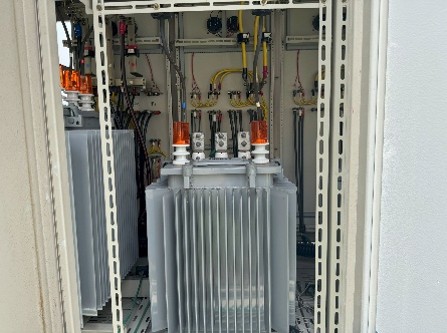
Furthermore, we analyzed the operational status and power demand within our facilities and optimized the operation of transformers at our Hiroshima plant. By consolidating equipment loads, we reduced the number of transformers in operation and lowered fixed losses, resulting in energy savings and a reduction in CO2 emissions (-15%). We are working to improve power usage efficiency while making effective use of existing equipment.
Utility Improvement Case Study (Head Office Plant)
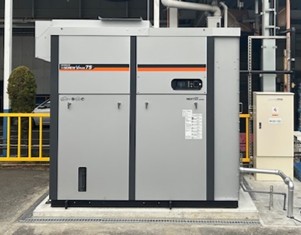
As part of our energy-saving efforts to achieve carbon neutrality, we are working to improve the efficiency of our compressed air supply equipment. The amount of air required by compressed air equipment varies significantly depending on production conditions. Previously, however, the air supply could not be sufficiently adjusted to changes in demand, resulting in energy loss from supplying more air than necessary. Therefore, we have introduced inverter-controlled compressors that enable optimal operation in response to demand fluctuations, achieving efficient air supply tailored to usage conditions. This has improved the energy efficiency of the entire compressed air system and reduced electricity consumption, while also contributing to the reduction of CO 2 emissions.
(Reduction of 206 t-CO2 /year)
Energy saving through relocation to the Kameyama Plant (Kameyama Division PP Plant)
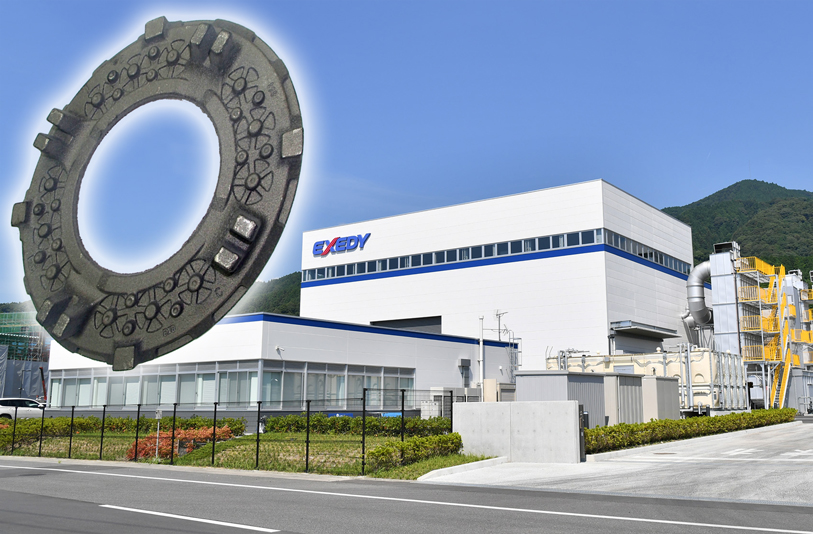
In July 2023, we transferred the manufacturing of pressure plates (PP), a key component of our clutch covers, from our Ueno Division to our Kameyama Division. At the Kameyama Division, in addition to introducing state-of-the-art equipment, we eliminated the pressurized holding furnace in the casting process and instead poured molten metal directly from the melting furnace into the ladle and then into the sand mold, resulting in a 12% reduction in electricity consumption compared to the old plant. Furthermore, while kerosene burners were previously used in the sand mold pouring process, the new plant has eliminated kerosene use through improvements in the dust collector's capacity.
(Reduction equivalent to 226 t-CO2 /year)
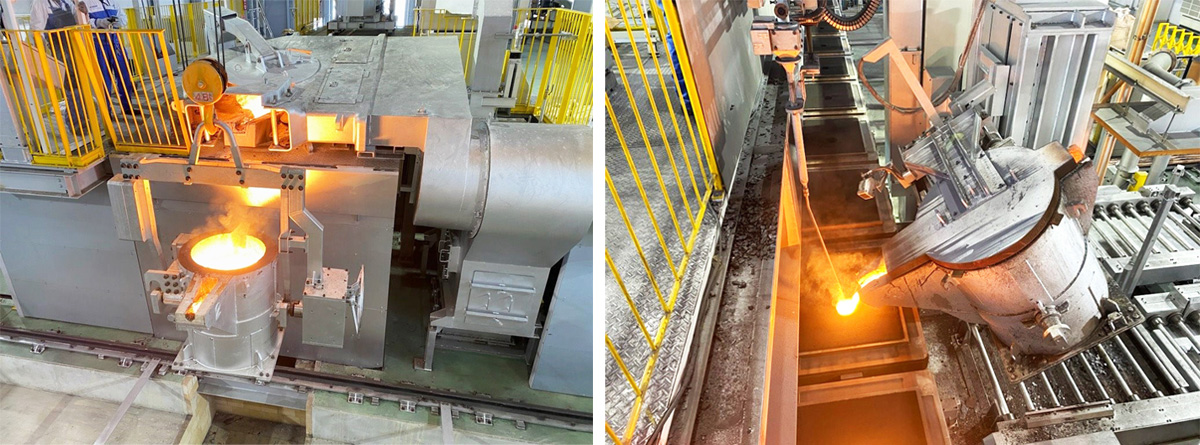
Left: Pouring molten metal from the melting furnace into the ladle / Right: Casting from the ladle into the sand mold
Installation of insulation jackets for heat treatment furnaces (Ueno Division, TC North Plant)
In AT Manufacturing Group, we are implementing the installation of insulating jackets on heat treatment furnaces in the heat treatment (brazing) process of torque converters, our main product, in order to reduce energy loss. By effectively suppressing the heat emitted from the equipment, we are reducing electricity consumption, and by fiscal year 2025, we have achieved annual energy savings of approximately 157,000 kWh and an annual reduction of approximately 78.2 t-CO2 emissions.
We will continue to contribute to the realization of a decarbonized society through the introduction and improvement of energy-saving equipment.
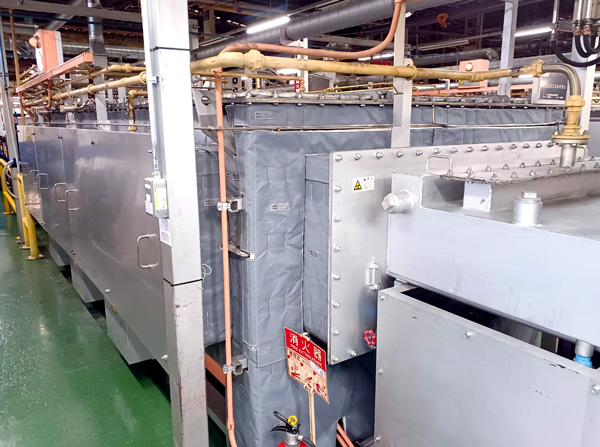
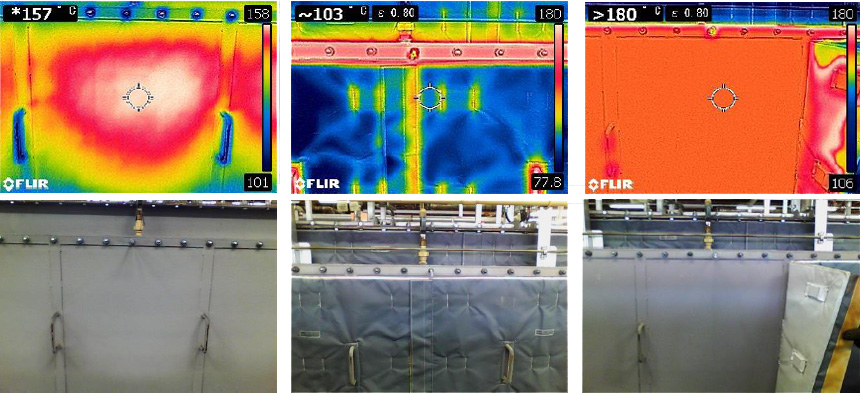
From left to right: without jacket / with jacket / after jacket insulation
After the jacket is insulated, the temperature is 20°C higher than when it is not worn, demonstrating its insulation and heat-retention effects.
Energy-saving activities for production equipment (MT Manufacturing Group)
We are promoting energy conservation in pumps used in production equipment. Pumps are used in many manufacturing facilities, including hydraulic presses and cleaning equipment, but they continue to operate even when the equipment is idle, resulting in power loss. Therefore, we introduced inverter-based speed control to optimize pump capacity according to the operating conditions of the equipment. As a result, we are reducing power consumption during standby while maintaining equipment performance and productivity, thereby contributing to improved energy efficiency and reduced CO2 emissions.
(Reduction of 19 t-CO2 /year)
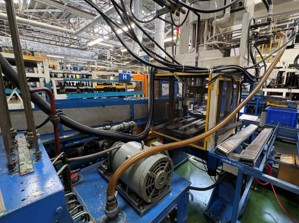
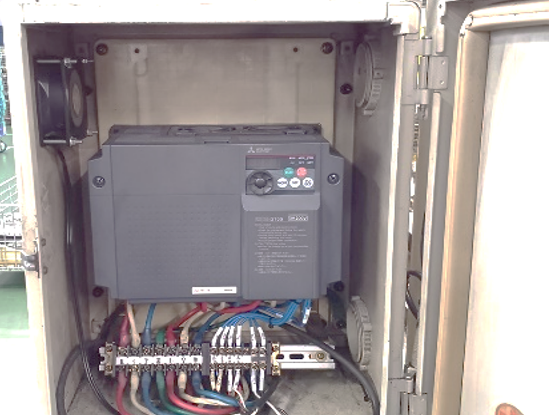
Other CO2 reduction and energy saving activities
Implementation of internal carbon pricing (EXEDY)
We use internal carbon pricing (ICP) in investment decisions to promote investment in energy-efficient equipment. Our Group companies are also working to utilize renewable energy, including solar power generation systems.
We will continue to reduce GHG emissions through energy-saving initiatives and the use of renewable energy.
- Unit price: 14,000 yen/t-CO2 (FY2025)
- Unit price setting: Calculate and set the present value based on the IEA WEO2021 SDS scenario
- How to use ICP: CO 2 Used in investment decisions for investment projects that have cost-saving effects.
(The ICP amount corresponding to the reduction effect is added to the investment return, thereby shortening the payback period.)
Utilization of renewable energy (Dynax)
Dynax Corporation is actively working to utilize renewable energy sources, including by installing solar panels, introducing solar carports, and introducing biomass boilers.
For more details, please visit the website of Dynax Corporation.
Waste Reduction Initiatives
To promote a circular economy, EXEDY Group is working to make effective use of resources and reduce waste. Each Group company aims to reduce the amount of waste disposed of by an average of 1% annually compared with the previous fiscal year, either on a per-unit basis or in total volume, and continues to implement waste reduction initiatives. Through these efforts, we aim to promote resource circularity and minimize our environmental impact.
Improvement Examples at the Head Office Plant
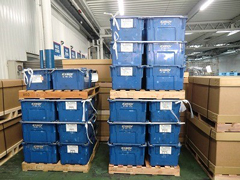
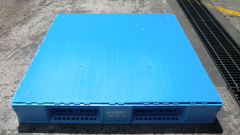
Packaging Improvement Example - Replacing wooden pallets with plastic pallets
At our company, we are continuously working to reduce the environmental impact of our logistics processes by promoting the reuse of wooden pallets and improving packaging. By extending the lifespan of pallets and promoting repeated use, the amount of wooden pallet waste in fiscal year 2025 is projected to be 58.7 tons, a reduction of approximately 24 tons (approximately 29%) compared to fiscal year 2019. These efforts not only reduce waste generation but also contribute to the effective use of wood resources and the promotion of resource recycling.
We will continue to review our logistics materials and improve transportation efficiency, working to reduce the environmental impact throughout the entire supply chain.
Review of shipping materials (Head Office TM Plant)
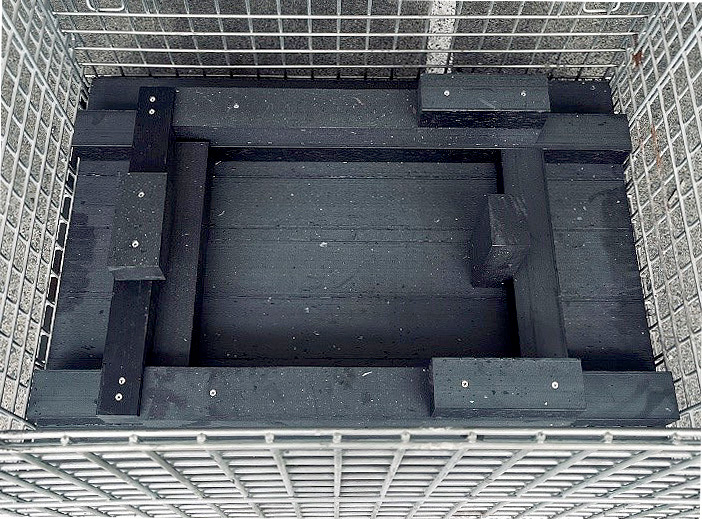
For the fastening materials used when shipping products, we use environmentally friendly materials that make effective use of recycled plastics. This material has the same workability as wood, while possessing high durability and corrosion resistance. While conventional wooden fastening materials needed to be replaced approximately every three years, these materials have been in use without any problems as of July 2026, 3 years after their introduction. This reduces the frequency of material replacement, leading to a reduction in material usage and waste. Furthermore, by utilizing materials m English
Translate suggestionade from recycled plastics, we promote the effective use of resources and contribute to reducing the use of wood, a natural resource.
We will continue to work towards realizing a sustainable society by reducing the environmental impact of our logistics and packaging processes and promoting resource recycling.

Compliance with chemical substance regulations
Our Group collects information on laws and regulations and manages chemical substances contained in products to comply with chemical substance regulations in each country and region. We check the chemical substances used at each stage, from product development through procurement and production, and share relevant information with our suppliers.
We will continue to manage chemical substances while closely monitoring regulatory developments.
Chemical substance management
Our group is committed to responding appropriately to increasingly stringent chemical substance regulations worldwide. We continuously gather information on legal regulations and promote the management of chemical substances contained in our products. Throughout each process, from product development to procurement and production, we verify the chemical substances used, share information with suppliers, and confirm compliance with the laws and regulations of each country and region. Furthermore, when regulations are revised, we assess their impact and share the relevant information internally, while working to establish a system that enables a rapid response.
Going forward, we will continue to comply with global chemical substance regulations while simultaneously improving product safety and reducing environmental impact.
Initiatives to reduce the environmental impact of purchasing and transportation
Initiatives to reduce the environmental impact of purchasing
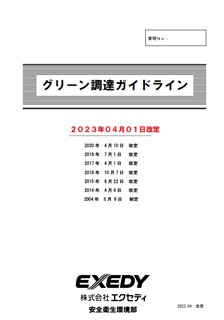
Our Group is working to reduce the environmental impact of its supply chain. Based on our Green Procurement Guidelines, we ask our suppliers to comply with environmental laws and regulations, improve energy efficiency, calculate greenhouse gas emissions (Scope 1, 2, and 3), and address environmental issues such as water resources and waste.
In product transportation, we are also working to improve transportation efficiency and reduce CO2emissions by improving packaging configurations to increase loading efficiency and reviewing logistics bases and transportation routes.
We will continue to reduce the environmental impact of our supply chain through collaboration with our suppliers and greater logistics efficiency.
Green Procurement Guidelines (Outline) Requests to our partner companies
- Compliance with laws, regulations, ordinances, etc.
- Establishment and development of an environmental management system
- Management of chemical substances contained in products
- Environmental Initiatives in Business Activities
- Promoting energy efficiency and energy conservation activities
- Reducing the impact of climate change, including greenhouse gas reduction, and adapting to climate change.
- Greenhouse gas emission calculation (Scope 1, 2, 3)
- Reducing the impact on water resources and water quality.
- Reducing the impact on biodiversity
- Efforts to address environmental issues
- Prevention of contamination
- Reducing waste and promoting a circular economy
- Reducing the impact on resource use
- VOC reduction
- Reduction of PRTR substances
- Supply Chain Management
Initiatives to reduce the environmental impact of transportation (improving efficiency during transportation)
In order to reduce CO 2 emissions not only during the manufacturing process but also during the transportation of products, in collaboration with EXEDY Logistics Co., Ltd., we continuously work to improve transportation efficiency by optimizing packaging to increase loading efficiency and reviewing logistics bases and routes.
Social contribution activities and biodiversity conservation efforts
Our Group is committed to conserving biodiversity in line with the vision of “living in harmony with nature” set forth in the Kunming-Montreal Global Biodiversity Framework. At our sites in Japan and overseas, we carry out activities tailored to the local natural environment, including habitat conservation and tree planting.
We will continue our efforts to conserve biodiversity through activities tailored to each region.
Biodiversity conservation activities (EXEDY Dynax Mexico)
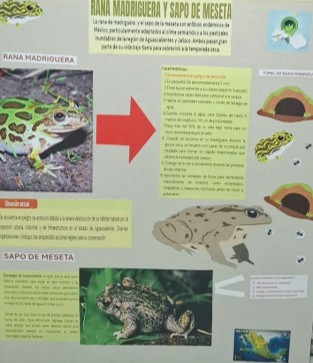
As part of its biodiversity conservation efforts, EXEDY Dynax Mexico is working to preserve the habitat of the Japanese tree frog that inhabits the area surrounding its factory. By maintaining the waterfront are and green spaces where the tree frogs can live, we are contributing to the preservation of the region's rich ecosystem. This initiative aligns with the principles of the Ramsar Convention, which aims for the conservation and sustainable use of wetlands.

Coastal ecosystem conservation activities (EXEDY Thailand)
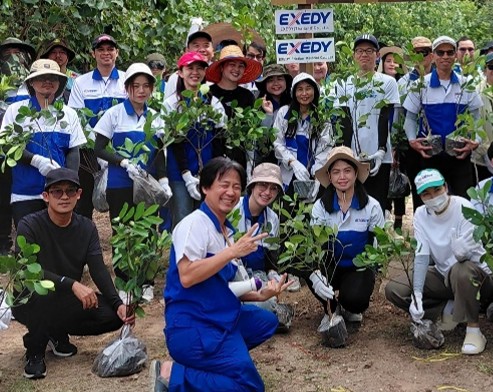
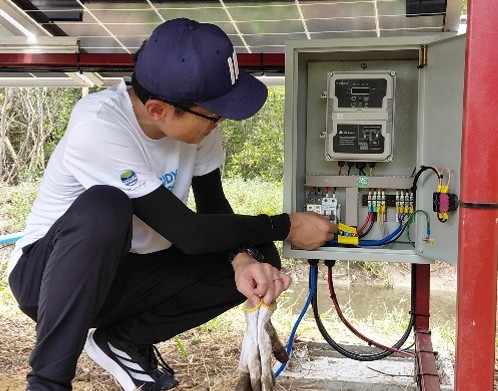
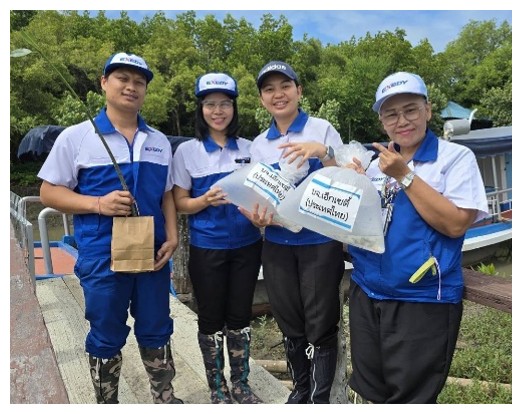
At EXEDY Thailand, we are committed to biodiversity conservation by planting mangroves and releasing fish into the wild. Mangrove forests not only serve as habitats for diverse organisms but also play a vital role as a "blue carbon ecosystem" that absorbs and sequesters CO2. To support the healthy growth of the planted seedlings, our employees have built and installed an automated watering system using solar power, ensuring sustainable maintenance.
Going forward, we will continue to contribute to both biodiversity conservation and climate change countermeasures through the preservation of the local natural environment and the utilization of renewable energy.